
Yes, when sourced from the right tier. Vietnam’s export-tier factories run modern CNC lines, skilled joinery and FDI-grade QC, with ~1,730 FSC certificates backing wood traceability. The catch is variance: lower-tier workshops use shortcuts, so the supplier you pick determines the quality you get.
On this page
- How Good Is Furniture Made in Vietnam, Really?
- Why Is Vietnamese Furniture Quality So High?
- What Quality Should You Expect by Furniture Category?
- Furniture Made in Vietnam vs China, Indonesia and India: Where Each Origin Wins
- What Are the Real Weaknesses of Furniture Made in Vietnam?
- What Certifications Should You Demand from a Vietnamese Factory?
- What Does Real Quality Control Look Like in a Vietnamese Factory?
- How Do US Tariffs in 2026 Affect Vietnam-Made Furniture?
- Sourcing Furniture from Vietnam: The 7-Step Process
- Where Are Vietnam’s Best Furniture Manufacturing Hubs?
- Source Vietnam Furniture Without the Quality Risk
Discover in detail what makes furniture made in Vietnam export-grade, where lower-tier factories slip, how 2026 tariffs change the math, and the four-stage QC sequence buyers run before every PO.
How Good Is Furniture Made in Vietnam, Really?
Yes, when you source from the right tier. Vietnam runs roughly 5,580 wood enterprises employing about 600,000 workers. Around 30% are foreign-invested, and they generate close to 40% of export value.
That export discipline is the quality engine. Roughly 93% of Vietnamese furniture output is exported. Western buyers reject sloppy work, so factories that survive at scale have already passed years of audits.
The brand roster is real. IKEA, Ashley Furniture, Pottery Barn, Williams-Sonoma, Restoration Hardware, West Elm, Crate & Barrel and La-Z-Boy all produce in Vietnam. Ashley alone runs five plants there.
The export figures confirm the trajectory. Vietnam’s wood and wood-product exports hit a record US$17.2 billion in 2025, up nearly 6 percent on 2024. The US absorbed about 55 percent of that, worth US$9.46 billion.
Why Is Vietnamese Furniture Quality So High?
Five drivers explain it, and none of them are marketing fluff.
| Driver | What it looks like in practice |
|---|---|
| Skilled joinery | Mortise-and-tenon, dovetail and finger joints, not staples, at export-tier producers |
| FDI discipline | 30% of exporters are foreign-invested and run on global QC systems |
| Sound materials | Domestic acacia and rubberwood plantations, imported US oak and walnut |
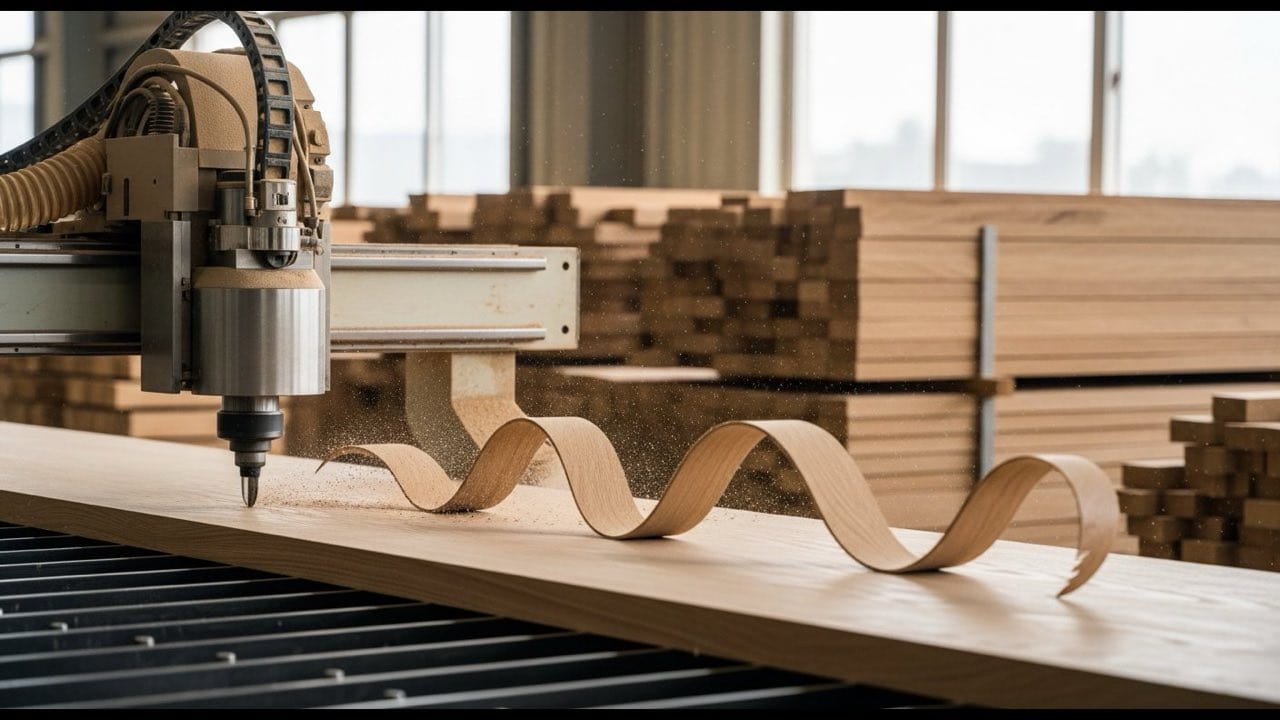
| Modern machinery | Homag, Biesse and SCM CNC lines, kiln drying, automated finishing |
| Sustainability push | ~1,730 FSC Chain-of-Custody certificates, 310,000 ha of certified forest |
The artisanal heritage matters too. Traditional woodworking villages in the Mekong Delta and around Hanoi still feed skilled labour into modern plants. That is why the joinery survives in factory production.
Vietnam’s national target is one million hectares of FSC-certified forest by 2030. For buyers selling into the EU, that traceability work is now strategic, not optional.
What Quality Should You Expect by Furniture Category?
Quality is not uniform across product types. Knowing where Vietnam leads versus where it just competes saves expensive mistakes.
Solid wood and case goods
This is Vietnam’s core strength. Reputable factories kiln-dry to 8 to 12 percent moisture content, the global standard for indoor stability.
Finishes range from Italian-style PU and NC lacquers to water-based and UV coatings. Always specify the system in your tech pack.
Outdoor furniture
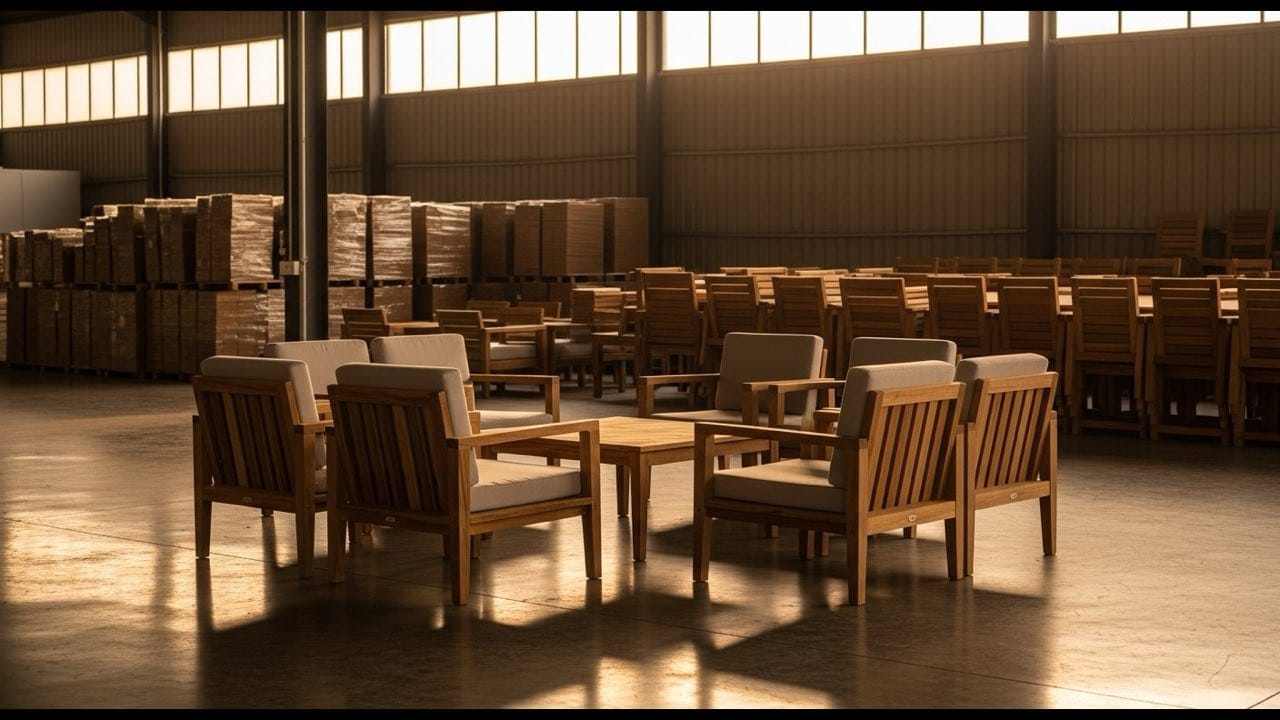
Vietnam genuinely leads the world here. The outdoor-living boom drives strong demand for acacia, eucalyptus and teak sets.
Quality outdoor lines use UV-stabilized PE wicker, marine-grade fabrics such as Sunbrella, and powder-coated aluminum frames. Salt-spray testing on metal parts is the standard hidden defect catcher.
Upholstered furniture
This category is growing fast but variable. Specify foam density precisely.
The home-furniture floor is 1.8 lb per cubic foot. Anything below that sags within months. Aim for 2.0+ lb per cubic foot for products you want to last.
Specify fabric rub counts too. Heavy residential use needs 30,000+ Wyzenbeek double rubs or 25,000+ Martindale cycles. Demand kiln-dried hardwood frames, never green wood with staples.
Rattan, bamboo and hand-woven crafts
This is a smaller but genuinely artisanal niche. Heritage clusters in central and northern Vietnam supply skilled weavers, often working with hospitality and boutique-retail brands.
Furniture Made in Vietnam vs China, Indonesia and India: Where Each Origin Wins
Each origin has its sweet spot. Pick by product type, not by reputation.
| Origin | Wins on | Loses on |
|---|---|---|
| Vietnam | Outdoor, solid-wood case goods, OEM/ODM flexibility, EU tariff access (EVFTA) | Intricate antique reproductions, deepest carving |
| China | Scale, supplier ecosystem, intricate carving, commodity costs | US tariff exposure, geopolitical risk |
| Indonesia | Natural teak, rattan supply chain, antique-style reproductions | Smaller capacity, slower lead times |
| India | Hand-carved pieces, mango wood, sheesham, intricate detail | QC consistency, container loading discipline |
The cost gap is real. Vietnam’s furniture labour runs roughly 30 to 40 percent below China’s. Most buyers report landed-cost savings of 20 to 40 percent on comparable production.
For ornate French or Italian antique reproductions and the most intricate hand-carving, India and Indonesia often deliver deeper craftsmanship. Vietnam is catching up, but it is not yet the first choice for that niche.
What Are the Real Weaknesses of Furniture Made in Vietnam?
Most guides skip this part. We will not, because honest weaknesses are how you build a defensible sourcing strategy.
Variance between factories is the biggest risk. The gap between a top-tier OEM exporter and a small workshop is enormous, even within the same province.
Joinery shortcuts happen at the lower tier. Lower-grade producers use dowels and screws where proper joinery belongs, or veneer MDF and sell it as solid wood. Pre-production material checks catch this every time.
Wood-species mislabelling is a recurring issue. Acacia is sometimes dyed dark to mimic teak. Lookalike woods get substituted for ash or oak without disclosure.
Hidden subcontracting is real. An impressive-looking factory may quietly outsource part of your order to a workshop you never audited. A subcontracting register clause in your PO contract is essential.
Cushion-fill consistency can wander on upholstered lines without tight technical sheets. Specify fill weight in grams, not just “medium-firm.”
Specify foam density, fabric rub counts and moisture content in your tech pack, then audit with a four-stage QC sequence: incoming material, in-line at 30 percent production, pre-shipment AQL 2.5, and container loading supervision. Skipping any stage is how horror stories happen.
What Certifications Should You Demand from a Vietnamese Factory?
Insist on current, verifiable documents. Old PDFs do not count.
- FSC Chain-of-Custody: traceable wood, verifiable on the public FSC database
- CARB Phase 2: formaldehyde limits on composite wood for the US market
- TSCA Title VI: federal US equivalent of CARB Phase 2
- ISO 9001: quality management system baseline
- GREENGUARD or GREENGUARD Gold: low VOC emissions, valued by hospitality and schools
- BSCI or SMETA: social compliance, demanded by most US and EU retailers
- CAL TB 117-2013: California flammability standard for upholstery
EUDR is the moving target for EU-bound goods. The EU Deforestation Regulation was postponed again in December 2025 under Regulation (EU) 2025/2650.
Large and medium operators must comply by 30 December 2026. Micro and small operators have until 30 June 2027. EUDR demands plot-level geolocation and proof goods are deforestation-free after 2020.
What Does Real Quality Control Look Like in a Vietnamese Factory?
Serious QC is multi-stage. A single pre-shipment inspection is not enough.
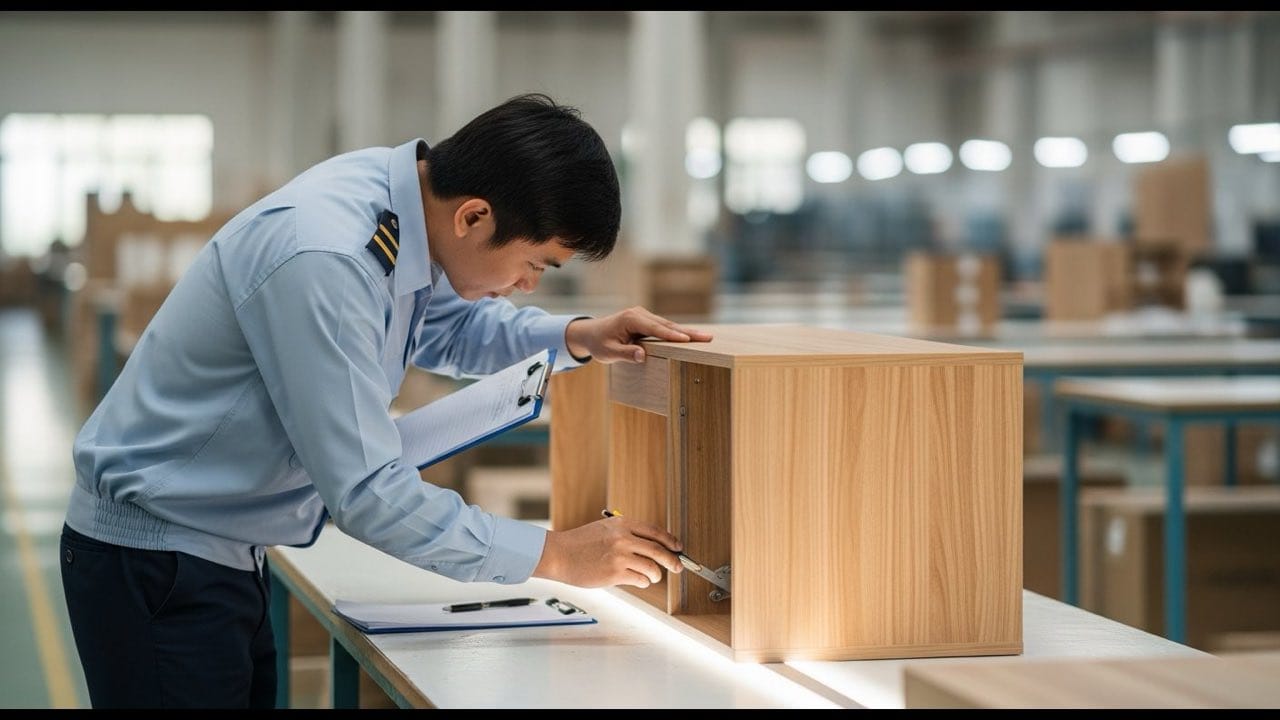
After 10,000+ hours auditing Vietnamese factories, here is the four-step QC sequence Jeremy runs. He is our lead auditor in Ho Chi Minh City.
| Stage | What gets checked |
|---|---|
| 1. Incoming material inspection | Wood species, moisture content, foam density, fabric rub count against tech pack |
| 2. In-line / DUPRO (at ~30% production) | Joinery, alignment, finish samples, early defect trends before scale-up |
| 3. Pre-shipment inspection (at ~80% packed) | AQL 2.5 sampling, functional tests, packaging drop tests, labels |
| 4. Container loading supervision | Carton count, dunnage, photo evidence, seal log for US-bound goods |
Third-party inspectors such as SGS, Bureau Veritas, Intertek and V-Trust charge around US$200 to 350 per man-day. That cost is trivial against the price of a defective container.
Tests should match the destination market. BIFMA X5.1 covers office, X5.4 covers lounge seating. EN 1335 and EN 12521 are the EU equivalents. CAL TB 117-2013 handles flammability, and CARB Phase 2 plus TSCA Title VI cover formaldehyde.
How Do US Tariffs in 2026 Affect Vietnam-Made Furniture?
This is where most competitor guides go silent. The 2025-2026 trade picture changes the math significantly.
Section 232 tariffs of 25 percent now apply to upholstered wooden furniture and kitchen cabinets from Vietnam. Softwood lumber carries a 10 percent rate.
A December 31, 2025 proclamation delayed the scheduled increases. The planned 30 percent and 50 percent rates are now pushed to January 1, 2027.
Transshipment is a serious legal risk. US Customs has caught Chinese goods relabelled “Made in Vietnam.” A 40 percent penalty duty now targets transshipped goods. CBP’s December 2025 enforcement alert flagged wooden bedroom furniture as a high-risk category.
A major plywood trade case is live. Commerce launched antidumping and countervailing duty investigations into hardwood and decorative plywood from Vietnam in June 2025. February 2026 preliminary AD margins ranged from 4.37 to 26.75 percent, with the petition alleging up to 152.41 percent.
Finished furniture is excluded from the plywood case. But if your supplier uses Vietnamese plywood components, your landed cost is exposed.
Sourcing Furniture from Vietnam: The 7-Step Process
Follow a staged process. Skipping steps is what causes the horror stories.
- Vet the factory. Verify certifications on issuing-body portals, check exporter history with US ITC import records, request a video factory tour
- Run an on-site audit. ISO 17020-accredited body, APSCA-registered auditors for social compliance
- Order samples. Test against your tech pack and destination-market standards
- Sign off a golden sample. Photographed, signed, stored at both ends, this is your reference for production
- Run a pilot batch. 50 to 200 units, full QC sequence, before committing to the full PO
- Place the full PO with precise specs, packaging requirements and inspection rights written in. Example spec: “FAS-grade red oak, 8 to 10 percent moisture content, mortise-and-tenon joinery, two-coat PU finish”
- Inspect every batch with the four-stage QC sequence above
Know the MOQs before you negotiate. Case goods and bedroom programs typically run one to two containers per model, with mid-sized factories accepting 30 to 80 units per SKU. Outdoor MOQs often start at 50 to 100 units. Upholstery is more flexible because the workflow allows shorter runs.
Understand the model. OEM means production to your drawings, ODM means the factory’s existing design under your brand, and private label sits between them.
Plan the calendar. Production usually takes 60 to 90 days. Add 30 to 45 days of sea freight, with three to four weeks to the US West Coast.
Where Are Vietnam’s Best Furniture Manufacturing Hubs?
Geography matters. Each cluster has its specialty.
| Region | Specialty | Note |
|---|---|---|
| Expanded Ho Chi Minh City (incl. former Binh Duong) | Solid wood, upholstery, outdoor | The dominant export cluster, 3,000+ furniture factories |
| Dong Nai | Solid wood, large-scale plants | Major plants for Ashley, IKEA suppliers |
| Binh Dinh (Quy Nhon) | Outdoor furniture, exports to EU | Specialised in patio sets and garden furniture |
| Long An | Mid-size case goods, upholstery | Cost-competitive, growing fast |
| Hanoi region | Rattan, bamboo, traditional crafts | Heritage workshops, smaller scale |
Since July 1, 2025, Binh Duong has been administratively absorbed into Ho Chi Minh City. Most factory addresses now read “Ho Chi Minh City” even when the physical location is the old Binh Duong industrial zones.
Source Vietnam furniture without the quality risk

I work at the core of Vietnam’s manufacturing ecosystem, managing account management so every client, from big to small, is taken care of closely, from factory selection to QC and shipping, and being the person you call when something goes sideways.
- Strongest in furniture & garment sourcing
- Direct negotiation in Vietnamese & English
- On the ground inside the factories
- Direct line to vetted Vietnamese factories